Training – 1

“How should I train?” everyone asks, whether to others or to themselves, and with good reason. Training works. Granted, some people prefer to simply go climbing and have fun, and not worry about training when they don’t have time to climb. That’s cool, too. It depends on your goals. For me, I want to be a decent all-around climber, and be prepared for big alpine routes, which is tough because hard alpine routes (versus snow slogs) require you to be good at multiple things at the same time. Fortunately, I’m not there yet, so I get to have the fun of seeing continual improvement. Part of that improvement, and fun, comes from training.

Also, quite simply, I like training – I’ve been super into training hard since I was a competitive boxer in college, and I worked my ass off. As with so many things, intensity and fitness go a long ways. I’ve never had an abundance of natural skill, but I know how to work hard and focus, and develop the requisite mental intensity when the time comes. Sometimes I lag, sure (as I’m sure some of my buddies would be quick to point out), but it’s always a process. As far as I’m concerned, one can never be good enough. Unless – until, perhaps – you reach a point in life where, for whatever reason, you’re simply not interested in improving. I hope I never get there.

I’ve enjoyed learning about training adaptations and how it works, too. I did my B.S. at Penn State, and my M.S. at the University of Montana, both in Exercise Physiology. I taught college at UM, as well as Santa Fe Community College, for a couple of years on visiting faculty appointments, before deciding against further academia pursuit in favor of being a climbing bum. Not terribly smart, I know, but it’s worked out, and now I make my living with writing and editorial work.

Anyway, I’ll post more training thoughts as time progresses (and as time allows). But, generally, my training can be loosely categorized into three parts. I’ll focus more or less on each of these depending on the time of year and my upcoming goals. This fall, for example, I’ve wanted to improve my technical rock climbing, and so I spent more time on that and less time on my high-end total-body fitness (i.e. alpine fitness). As we enter the winter season, which begins my busiest time of year with my editorial work, I’ll shift into more short-duration, higher-intensity training. Into spring, I’ll have to make time to start adding longer days in the mountains in order to get my sorry ass into all-day shape. That’ll be challenging, since I’m super busy with work through the spring. But I never want to show up out of shape. Just like I never went into the ring out of shape – if I lost, I had no excuses, the guy was better than me – and now, 20 years later as an old fart, that philosophy still holds. I never want to go into the mountains out of shape. As the saying goes, you want to make yourself Hard to Kill.

I try to mix it up between (1) developing (or at least maintaining) my skills, (2) building high-end fitness (both strength and aerobic), and (3) building long-route/all-day endurance.

1. Skill Development.

This comes from climbing, and trying to climb things that are difficult for me. I mentioned some of this in an earlier post. Much of the year I do this outside, but sometimes in winter it happens in a climbing gym. I’m focusing more on this lately — in the past I have too often only done the things I’m already OK at (like soloing easy routes), and not pushed my high-end technical skills enough. Improving your upper-end, so long as you don’t neglect the long days and sketchy alpine-prep experiences, improves all of your climbing.

2. High-end Fitness.

Depending on the time of year, I’ll often do parts of this indoors with weight lifting and high-intensity circuit training (concepts similar to CrossFit and Mountain Athlete workouts, with the latter usually seeming better for alpine climbing). Part of the idea here is to build my total body strength – I need it — I’m not a very big guy, I weigh about 142 lbs, and carrying a heavy pack takes a lot out of me. For aerobic fitness and developing anaerobic capacity I usually head outdoors for intense hill running, hiking, or uphill skinning (ski touring) as fast as I can, often times through informal interval training formats (interval training has been proven to be tremendous for improving aerobic and anaerobic fitness). When possible, I’ll include this in my skill development work and/or my endurance work. For example, I very rarely just hike leisurely to the climbs. I usually try to go hard, especially when going up hills – the approach can be a serious hill-training session. On solo outings I will run uphill to the base of the climbs, going as fast as I can, and get climbing-specific fitness (climbing fast) by soloing (easy stuff) a lot of terrain. By the time I’m done with a high-intensity outing like this, I’ve also built up some good endurance work.

3. Long Route Endurance

I develop this mostly through climbing. I try to get full days in the mountains on a regular basis, at least if I have a trip coming up. I live very close to the mountains and to excellent rock climbing, so I have the opportunity to do this – it’s why I moved here, living in a $65/month shack for my first year, before upgrading to a 7×11 square-foot chicken coop. It’s what I wanted to do. But don’t think you have to live in the mountains to develop mountain fitness. People can gain all-day fitness by racking up big-pitch days at the local crag, or even in the climbing gym. Add more pitches as your fitness grows, and increase the proportion of harder pitches, too, as you get better.

Proportions

I’ve found that a couple of days a week of extremely high intensity work does tons for high-end fitness (multiple studies support this). It is also very time efficient, which is great for when I’m busy and don’t have time for long days in the mountains. When I’m actively training for a trip (though I’m always kind of “training” b/c I love being active and getting out climbing), I’ll try to do at least 2x/week of very high intensity work, at least 2x/week of difficult (for me) technical climbing, and one full day/week (8-12 hours at first, increasing to more, sometimes much more, like 16-20 hours on occasion) in the mountains, and one half-day or more of continuous effort (like a good half-day of rock or ice climbing). In reality, I rarely manage these as six separate days. Some of these things overlap — like trying to climb hard on a big day in the mountains, perhaps in which we go hard on the uphill approach, for example. Four days a week of going hard, whether duration, intensity, or both, typically works me over pretty good. I also “listen to my body” and gauge things on how I’m feeling, so it’s not so much a formula but more of a general outline. I also like to have fun and climb things I like to climb, so if that means I miss a “training” type day to have fun climbing with friends, then that’s OK. It’s important to remember the overall picture.

Finally, I try to never let myself get too out of shape. I’m a bit neurotic about my fitness – I love feeling fit and love the mental side of it as well. It’s very important to me, so even when I think I’m in “bad” shape I’m actually probably doing OK.

How should you train? I can’t say – it depends on your goals and how serious you truly are – but avoiding too much couch time and working hard is a great start.

By Design

Wilford’s speedometer crests 110 mph, and though sunglasses hide that crazy spark in his eyes – the shimmer that people like him all seem to have – I think he’s mellowed some. He’s got kids now, and says his wife would kill him if he rolled the car. He’s been in seven rollovers, though he’s sure to note that he’s only been driving in five of them (“It sounds kind of excessive when people say seven, like I might have a problem”). He’s also survived scores of harrowing situations in a 37-year climbing career that certainly places him as one of North America’s best true all-arounders – rock, ice, big-wall, mixed, real-deal alpine. Steve House describes him perfectly in his book as “A climber’s climber.” Wilford’s the real deal, even if he’s mellowing. He tells me that his son is the wild one now, a three-year-old terror who proclaims, “I’m not afraid of anything!” and, from the stories, regularly shows it. Something about the apple and the tree…

I love that youthful mindset.

Anyway, we’re heading to Moab for the week for a product design meeting for Patagonia. Should be productive, with lots of accomplished gear geeks brainstorming, and good fun with friends – both fellow ambassadors and employees from hq in Ventura.

Product development usually starts with ideas based on a need, or a problem to be solved, and then emerges into prototypes, discussions, re-working of prototypes, testing, more discussions, more refinements, and never-ending tweaks.

Once a product comes to market, someone needs to write about it. That’s where I come in – at least partly, since I write some of the catalog copy (I’m also one of their alpine ambassadors, thus the product development involvement). Just finished a big round of copy yesterday, leaving me mentally fried. I made-up some creative copy block leads that I’m not sure will fly, we’ll see. Sometimes, when I hit a creative wall, instead of doing the usual (giving up and pouring another marg) I’ll dream up my own products – with copy. I’ve got a bunch of them. It’s fun. Here’s one:

Aggression Tank

Nothing says “don’t fuck with me” like the latest addition to our Lifestyle line. To accompany your sick tats, shaved head, and “Whatchyoulookin’at?” scowl, maximize the intimidation factor this season in our Aggression Tank. An ergonomic mp3 pocket seamlessly boils your blood with the fury of the latest Limp Bizkit album, and a hidden stash pocket keeps the crystal meth out of sight. Cut tight to the fifth intercostal space along the ribs, but with a baggy, flattering fit below the sternum, it’ll show off what’s really important: The guns, baby, the guns.

Colors: black (155) • black (155)

I don’t know where I was going with any of this, but it’s great to be in the desert, was great to ride over with one of my climbing heroes and to boulder together at Big Bend, and it’s great when, at least sometimes, things all work out the way you’d have designed it if you could. Somehow it reminds me of Mark’s telling me about his son, all fired up after a night of trick-or-treating, holding his bag of candy above his head and shouting: “Never give up!”

Marg Recipe of the Week (Corralejo Blanco)

It’s been said that everybody is good at something, and that we all have a reason for being on this earth. Even me. And I’m damn good at one thing: making margaritas.

IMG_1758I’d initially, naturally, gravitated toward thinking I should make the first marg post my basic, quick & easy, lower-end, marg 101 deal – I’m typically all about enabling success through keeping expectations low. But when it comes to margaritas I don’t fuck around. We’re starting the margarita series with a good one. My friend Ryon and I perfected this recipe last weekend, I’ve done quality control (i.e. drinking it) this week, and it’s time to share – I’m doing my part to spread world peace and love through the art of margaritas.

Tequila: Corralejo Blanco

-I’d never tried it before, but it’s great. A little pricey for the dirtbag climber – I have few standards and am a cheap bastard, but I make exceptions for tequila and coffee – this runs about $30 for a 750mL bottle. I got the Blanco (aka, Silver or Plata), which I enjoy in good tequilas. Bonus: it’s typically cheaper than the Reposados and Añejos. Blancos have a more “raw” taste, like you taste the agave plant, as opposed to the more aged tequilas, which tend to be smoother and take on a little of the wood barrel taste. Advantage: In the cheap stuff, Blancos can be bad. In the good stuff, though? Love ‘em.

-From the bottle: “Blanco comes straight off our copper pot still and is bottled unaged. Don Leonardo calls Blanco ‘The Truth’ because it best captures the authentic character of the Blue Weber Agave that all our Tequilas are made from.” [I don’t know who in the hell Don Leonardo is, but I’m pretty sure he’s the man…]

Mix: Fresh Squeezed Limes and Homemade Simple Syrup

1. For the syrup, heat 1 to 1 sugar to water (i.e. 1 cup sugar, 1 cup water) – heat gradually, to just below a boil, stirring occasionally, then remove from heat. If it boils it’ll burn. The heat dissolves the sugar into the “simple syrup.” Put the warm pot inside a bigger pot of cold water, to cool it down while you:

2. Squeeze the limes. If firm, first roll them on the counter, under the pressure of your hand, to soften ‘em up. I like the hand juicers (you can always just cut the lime and squeeze purely by hand, ghetto style, but it’s messy). Don’t know how the machine juicers work, but I like doing it myself. (I keeps it reeeeal!) Seems that a medium lime gives about 2 oz. of juice, maybe a little less. Fresh limes are super acidic, so some sugar smooths it out.

3. Proportions: mix about one part pure lime, and maybe 2/3 or 3/4 part simple sugar. Play with it. That’s your non-alcoholic half. Great, pure, simple.

The Margarita:

-Half tequila, half mix. Key pointer: add a splash of OJ. Shake, salt the glass, ice, enjoy. Absolutely superb.

A couple of things to remember, for the uninitiated:

-Real men don’t drink blended margs. On the rocks, with salt.

-Shaken, not stirred.

-Oh yeah – I shouldn’t have to state this, but – no umbrella.

Media Review: Podcasts

Like slow-cooked food, good narrative requires attention. It’s not Twitter. It’s not Facebook. It’s different and it takes time. I love having my mind engaged. Perhaps that’s why, despite my “what am I going to do now?” joking, getting my cable TV turned-off was the best thing ever.

brain rotAs far as time-investment-to-imaginative ratios go, podcasts are a terrific deal. TV? You feel your brain turning to mush as you sit there drooling on yourself, literally getting stupider by the minute – something I can ill afford. It’s the ultimate fast-food nation approach: don’t have to think, it’s just handed to you. To be fair, cinema can offer wonderful, brilliant art. Just don’t expect to find it on 99% of what you get with your monthly TV package. Sure, sometimes we just want to be entertained, and that’s cool on occasion.

And we all get busy.

Podcasts? I don’t have time to sit and listen – of course you don’t. But when I’m driving? I can’t read. And, thank god, I can’t watch TV. Music, I love it. Sometimes it moves me, sometimes it relaxes me, sometimes I just veg. Great narrative always engages me. The voice adds another dimension. I insert the visuals with my mind’s eye, I wonder things that get partially answered, and I feel a connection with the author through the personality of voice.

So, yeah, I’ve become a huge fan of podcasts – it started a year or two ago with the much-heralded and award-winning This American Life (hosted by Ira Glass; free download every week). It’s awesome, and Ira Glass is the master.

Then I started hearing about what some called “This American Life for climbers and adventurers” – The Dirtbag Diaries (also free), a creation of climber Fitz Cahall. I subscribe to both through iTunes, and love ‘em. I’ll put them on my mp3 player and listen while going for a walk or waiting for a flight. I’ll burn hours upon hours of them for road trips. Listening to them in my car makes regular daily driving tolerable – even enjoyable.

My praise for the DD might seem disingenuous (as if I’d ever be accused of being ingenuous…), since I’ve now done two “Shorts” episodes for Fitz. But I was a fan first. And mine aren’t the best – the best I’ve heard is The Crusade. Download it, burn it to a CD or onto your mp3 (iPod if you’re kewl), and just listen, forming pictures with your mind. You’ll love it.

A recent DD favorite is The New Conservationists – it’s about passionate people, from John Muir to the three featured in mini-stories on the show, people with a sense of purpose, who reinvent themselves, face failure, brush themselves off and try again, all for places they – and we – love.

Three Eighths to Eternity mesmerized me, a spellbinding and beautiful story about a homemade sailboat journey.

For those with lower expectations and wanting a good rant, my first episode was The Peach – a story of my history of deadend jobs (Taco Bell, Pizza Hut, bread boy…) undertaken so I could climb more. Some commenters loved it, others thought me an ass-hole because I unabashedly ripped on a boss who deserved it, and also ripped on the American holy grail of mindless consumerism. OK. My most recent one, Friends in High Places, belies my earlier highbrow “ohhh, I like having my mind engaged” blather, as the episode follows my bumbling journey with Facebook – it might be closer to TV after all. Or not.

Regardless of your favorite episodes, I venture to say that any of them are better than rotting your brain in front of the TV or getting pissed-off while sitting in traffic, and the Dirtbag Diaries might even engage your imagination, might inspire you to quit your job and launch off on a homemade sailboat, or to become John Muir, or, if you have particularly low expectations, to get a job at Pizza Hut.


ADDENDUM: While writing the above (as subsequently prompted by Blake’s comment below), I forgot one of my favorite DD episodes — perhaps my all-time favorite, on equal ground with The Crusade: The Cowboy and the Maiden. I listened to it twice in a row when it came out, just amazing, inspiring, funny at times, wild, and very moving. An absolute must-listen.

How Big Is Your Rack?

I know you’re thinking, didn’t take long for Kelly’s blog to go downhill (followed by: I hope he posts pictures).

Well, someone recently asked me, “Is it better to bring doubles and triples of everything, or try to get used to running it out and climbing with a lighter rack?” It’s a loaded question, impossible to answer because so many variables exist. A few things to consider, though…

A big part of it depends on your end goals. If you’re psyched to crag forever, and weight and bulk aren’t issues, sure, bring it all. Keep it safe – placing lots of gear is safe, and top-roping even safer. If you want to push your boundaries and expand your options for adventure, and embrace routes that pose psychological as well as physical challenges, or if you aspire to alpine routes, then indeed you’ll need to learn to handle runouts. But how? It’s really no different from any form of training – through progressive overload. Get yourself used to it gradually.

Be smart, though; don’t get hurt. If you know you need a blue TCU to keep you from decking at the crux, you’d be a fool to intentionally leave it behind. But often times you don’t know what gear you’ll need. And weight matters in the mountains, and you’ll never get up anything – and it’ll suck carrying everything – if you’re bogged down with the kitchen sink. But what if I don’t have the blue and I need it?

You’ll never have everything you think you need. And so you deal with it, or you go down.

I’ve done both, plenty. The most profound examples I can remember were on my two

gear shot Azeem

Before I dropped part of it...

Pakistan trips with Josh Wharton. On our new route, the Azeem Ridge, on Great Trango Tower in 2004, we started up the 7,400-vertical-foot route with a pretty basic rack. We knew the lower parts would be moderate, but up high was a mystery. Also, we dropped a quarter of the rack on the second pitch (my lead, but it was Josh’s fault, I swear…). Anyway, several times on the route we simply had to run it out. Fortunately, Josh drew the hardest leads – and often, as luck had it, he didn’t have the right gear. What to do? He punched it. Before you say, “That’s sketchy,” remember that it’s all relative. On his cruxes, I’d have been sketchy. He was solid. We all run it out in life – for some it’s on class-four terrain, for others it’s 5.11 in the Karakoram.

29 Cordes - JW rap2 LR

Bailing off Shingu Charpa.

Two years later, a couple hundred vertical feet from the summit of Shingu Charpa, after three days and 45 pitches, we retreated from “easy” ice slopes – we hadn’t brought proper ice gear (it was the same gear we got away with on the upper parts of Great Trango), and we deemed it too dangerous. Live by the sword, die by the sword… It’s a dark art, figuring out when to punch it and when to bail.

So, some thoughts I’ve developed, many of which I still struggle with, as climbing can be scary:

1. Improve your climbing skills. Drop the “I’m a trad hardman” attitude or whatever, and realize that bouldering and sport climbing help with technique and strength. This improves your confidence when you most need it. Just don’t get too accustomed to clipping a bolt every few feet. Mix it up.

2. Be realistic with your fears. Do you really need to place four pieces of solid gear within a two-foot span, when the pieces below are also good, and the fall would be clean? Wean yourself off of the unnecessary. Realism with fear requires you to balance consequences of a fall with likelihood of a fall. This relates to your skills and confidence. Yes, I know, anybody can fall anytime. We take risks every time we go out. It’s a dance of probabilities. If you don’t accept this, you should stay home.

3. When you go long stretches between gear, make sure your gear is good. I’ll often place a couple of pieces, a mini-anchor, when I know it’ll be a long time until my next gear (you’re stopped anyway, and placing two – or three – pieces at the same stance is faster than two pieces placed at separate stances). This allows me to climb with more confidence, which means I climb better, which means I’m less likely to fall.

4. Teach yourself to be OK with safe falls. When sport climbing, or even when rock climbing above solid gear with a clean fall, occasionally jump off. What? Yeah, jump off. (Unless you’re wearing crampons, which can catch on things and break your legs.)

5. Learn to trust your gear and, if it’s safe, try until you fall. For people used to trad, ice, and alpine, this can be hard – I’m often a total wuss at this (too often just giving up, downclimbing to a piece and hanging), but am working on it, and trying until I fall has greatly improved my climbing. Get used to the good gear catching and holding you. Learn to use it well.

6. Embrace runouts when it makes sense. When does it make sense?
  • When a fall is clean. In the gym, unless they’ll yank your membership, if you’re on the wildly overhung wall it might be fine to skip a clip now and then. You get used to just climbing without the security blanket of the self-top-rope inherent to many gym and sport routes. And if you fall? So what – nothing but air.
  • When you’re certain you won’t fall. But still, don’t be a fool – most accidents seem to happen on easy terrain, when we drop our guard and get complacent. Keep in the back of your head: “If I slip here, or if rockfall beans me, what happens? Is it time to place pro?”
  • When you have no choice. That’s when you’ll be grateful for all of your training, and your strong head.
Josh OW day 4

Josh Wharton at 20,000 feet on Great Trango Tower, about to punch it without the right-sized gear.

If you climb enough, and certainly if you climb in the mountains, you’ll someday face a situation where you don’t have the needed pro, it’s a dangerous or even lethal fall, and then what are you going to do? It’s easy for the climbing-instructor-guy in all of us, the one who sits there with his bullshit “told you so” attitude after every accident, to say: “You go down.” Oh yeah? What if you can’t reverse the moves or can’t lower off? (That does happen in real-world situations.) Or what if, quite simply, you want to go up more than you want to go down?

Then, you do what Josh did on day four of our route on Great Trango, 7,000 feet off the deck and without the gear he needed: you remember that you’ve built up to this and that you have the skill, and so you take a deep breath, focus, and climb like you know how.

Either that or you go down.

Media Review: Reel Rock Film Tour

First: Any review or opinion of media will, by definition, be subjective. For example, some people are into the simple “climbing porn” stuff. It goes well with the bong, I’m told, as one’s IQ plummets into the single digits and the thumping, mesmerizing techno soundtrack begins (which always reminds me that I could be home folding laundry…) and a bunch of shirtless gaylords start screaming in agony as they slap for little holds, over and over and over and over… Not that there’s anything wrong with that, of course. But the Reel Rock films avoided it. Thank god.

They didn’t go to the other end, either, thank allah, and have those mind-numbingly clichéd scenes, present in too many climbing films, where some chump sits with a furrowed brow and pensive look gazing into the horizon and babbling about “why” and what it all means.

rr_09_poster-375I must add that I wholly respect the creative attempts of those who try to make films of any sort – it’s not easy to do it right (obviously), and I think climbing films are largely in their infancy. Or maybe adolescence. Some breakthrough exceptions exist, and one of them is what I saw at the Reel Rock tour.
By the way, I’m pretty sure that Reel Rock was actually a combination of the newest Big Up production, Progression, and clips from Sender Films’ new series, First Ascent. And the tour might be over by now. Regardless, it was awesome. All of it. I think it’s the best climbing film(s) I’ve seen. Granted, I don’t see many of them because I’d usually rather read a book listen to a podcast, or do something that engages my imagination. But Reel Rock had great stories and great lines from the protagonists, coupled with unbelievable footage. It had a feeling of humanity, not just porn. The content ranged from jaw-dropping human performance, to funny, to emotional, and to stand-up-and-cheer inspiring.

One of the coolest things: I think non-climbers could love this film (I know it’s a combo of films, but hey, I’m on a roll) – it could be a crossover type success for the athletically inclined. Some of the athleticism absolutely blew my mind – talking world-class, Olympic-level athleticism that would leave any viewer slack jawed. I imagine that some viewers, especially non-climbers, might ask “why” during some segments, like the amazing piece on Alex Honnold free-soloing Half Dome, which includes super honest (and hilarious and endearing) words from the young phenom that make abundantly clear that he knows what could happen – and, I’ll give this much away: He had his first-ever soloing freak out up there, nearly losing it. Even the comp-climbing clip fascinated me – I loved the glimpse into a world so different from my own, yet still bound by the commonalities of passion and climbing. The film showed those commonalities in many forms, and throughout engendered the “show don’t tell” storytelling angle that, at least in my mind, too many climbing films miss.

By the end, after all the clips showing the commitment, beauty, joy, and devotion, you don’t need anyone trying to lamely explain “Why.” Sure, some people still won’t get it, but they never would anyway.

Spiderman, Cowboys, Bumblebees and Flowers

I am a pretty flower and she is my honey bee. (Hmmm, guess who came up with the costumes?)

I am a pretty flower and she is my honey bee. (Hmmm, guess who came up with the costumes?)

The problem with growing up is that I don’t want to do it. So, I’m thinking I might just wear my Halloween costume everyday.

Too often we become “adults” and the curiosity of life fades. We forget how to play, everything gets so damned serious, and we lose the imagination and wonder of our youth. One of the things I love most about climbing and the adventuresome mindset is that it feels like an open slate, where the fantasy of the impossible as well as the possible still exist.

Somehow I think of this every year around Halloween. I absolutely love seeing little kids get so psyched on their costumes. In their yet-un-jaded minds, they become Spiderman, or a Power Ranger, or a Ninja. And it’s serious – they are all that.

A year or two ago here in Estes, mid-summer I think, I saw this little kid springing down the sidewalk from his tiptoes, holding his chin high, as if he thought he was ten feet tall. He wore gloves, boots, mask, the full deal, even though it was all a size too big. I tied not to laugh, but my smile gave it away. “He’s worn it everyday since Halloween,” his dad said with a smile, half apologetic, half pure joy. The kid stayed focused. He is Spiderman.

For me, I wanted to be a cowboy. A real west cowboy. Not only for Halloween but for years. Old photos showed it: First day of school: cowboy outfit. Christmas morning: cowboy outfit. Hugging my dog: cowboy outfit.

We grow up and things change, and I don’t want to be a cowboy anymore (too much hard work), but I still cherish the unbound mindset. We see it in different ways nowadays, and, I think, one of them is laughter, great laughter. Jonny Copp had the greatest laugh, and it forced itself out in the craziest situations, instantaneously changing serious situations into moments of possibility. And, though I haven’t thought this through, maybe it all ties in with self-expression. Who we are, who we want to be.

ba cracka dance lab

Brent Armstrong refining the alpine start with the “Cracka Boy Dance” at the trailhead, inside his van – The Climb Lab – after the coffee and gangsta rap kicked in.

I think this mindset extends beyond costumes and applies not only to those who buck societal norms and chase windmills in the mountains, but to free thinkers and anyone willing to express individuality, the small minds that judge be damned. Whether it’s how you dress, who you love, or the urge to dance. Though it does remind me of a good joke:

An old guy is hanging out at a bus stop, and he’s staring at this punk rocker kid with a multicolored Mohawk. The kid finally snaps: “Whatchyou lookin’ at, old man?! Haven’t you ever done anything wild in your life?”

“Well,” the old guys says, “As a matter of fact I have. When I was in the Navy, I fucked a peacock once and so I wondered if you were my son.”

OK, so I’m not going to wear my costume every day (and, for the record, I’ve never seen a peacock up close). No need, when you can run, climb, ski, and play in the mountains, laughing and dancing on the summits.

kc - P1010968*

The Fun Scale

I first heard about the Fun Scale from my friend Peter Haeussler back in 2001, as we bushwhacked through thick Alaskan Devil’s Club en route to cold beers on his sailboat. I’d just come out of the Range, where Scotty D and I had a terrific climbing trip, sometimes terrifying but we loved it later – we’d put up two new routes on Thunder Mountain and made the probable first one-day ascent of Mt. Huntington. Anyway, while bushwhacking and salivating over the beers, avoiding the bears, and dealing with the Devil, it dawned on me that when engaged in Type II and Type III fun, I find myself dreaming about Type I fun. But the transient fix of Type I fun rarely lasts, at least without something deeper, something committing. And so I think … ahhh, nevermind – I could go on and on.

Here’s the Fun Scale:

Heading toward the upper parts of Mt. Huntington.  Scott DeCapio photo.

Leaving the good stuff and heading toward the final slopes on Mt. Huntington. Scott DeCapio photo.

Type I Fun – true fun, enjoyable while it’s happening. Good food, good sex, 5.8 hand cracks, sport climbing, powder skiing. Margaritas.

Type II Fun – fun only in retrospect, hateful while it’s happening. Things like working out ‘till you puke, and usually ice and alpine climbing. After climbing the West Face Couloir on Huntington, Scotty and I both swore that we hated alpine climbing. The final 1,000′ was horrific – swimming up sugar snow that collapsed beneath us, roped together without protection – and took nearly as long as the initial 3,000′ from camp. On the summit, Scotty turned to me and said, in complete seriousness, “I want my mom so bad right now.” By the time we reached Talkeetna our talk of Huntington turned to, “Ya know, that wasn’t so bad. What should we try next time?”

Scotty (L) and me back in base camp after Huntington.

Scotty (L) and me back in base camp after Huntington.

Type III Fun – not fun at all, not even in retrospect. As in, “What the hell was I thinking? If I ever even consider doing that again, somebody slap some sense into me.” The final 1,000′ of Huntington, when I stop and think about it…but, then again, a friend climbed it the next year and had perfect conditions.

I guess you never really know what sort of fun you’re getting yourself into once you leave the couch, which is fine, because it doesn’t always have to be “fun” to be fun.

Maybe the whole goal, the path of the enlightened, is to turn Type III situations into Type I fun. Right. Anybody had any luck with that?

The Chief Speaks

I’d planned a margarita recipe post, but sometimes these gems arrive and you have to act. At the end of my Opener post, I mused about how some things never change. Indeed…it took him a week, but The Chief responded. Put down your coffee if don’t want to spit it onto your keyboard. Ladies and gentlemen, The Chief speaks:

That is funny as hell, hope you also post a photo or two of yourself with that greasy little “LA Waiter” ponytail you used to sport.

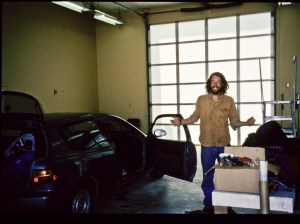
Upon getting lost trying to find the face, we bumbled further until gaining the upper rock wall, where recent storms -- we hadn't been following the weather, of course -- had blanketed all of the holds. We got lost again. Then benighted, and I got hypothermic. The Chief pulled me through, we topped out in a full-on blizzard, descended and promptly started hiking the opposite direction of the trailhead until some hikers turned us around.

Upon getting lost trying to find the face, we bumbled into the upper rock wall, where recent storms – we hadn't checked the weather, of course – had blanketed all of the holds. We got lost again. Then benighted. A major blizzard hit, and I got dangerously hypothermic. The Chief pulled me through, we topped out, descended and promptly started hiking the opposite direction of the trailhead until some hikers turned us around.

Ahh, gimme some time and I’ll send on my own recollections of the notorious “Sketchy Kelly” on that strange but awesome trip…I have vivid recollections of eerie, dream-like fumbling shenanigans high on the face in the dark, with only one working headlamp? My god we were eager.

I was especially proud of our immediate departure back to MT with no sleep after that soggy epic, fueled by whiskey and espresso, talking non-stop driving 80 as you struggled to catch some shuteye. Strange days indeed.

For some reason I am also reminded of a certain trip to Whitefish to my brother’s house where we crawled in the window, you were forced to ingest dangerous chemicals, promptly passed out like a hobo in a snowbank, only to suffer the indignity of my shithead brother positioning his pitbull’s butthole in your face as you dreamed of alpine glory…real classy, eh?

I love the photo of me by the pod, really shows what a swaggering, oily, self-indulgent hair-farmer i was back then…good god man, amazing I could even find the time to take a break from wheedling my old ass into some college girl’s bedroom (remember when i lived with [NAME REMOVED TO PROTECT THE INNOCENT] and her two 20 yr old roommates? Real impressive for a 28 year old unemployed drifter).

“Hey baby, damn you are fine, I’m a great listener, hey, any way I could stay at your place till I figure out my next cool scheme? I got this great idea of importing tiny rugs from India with fractal geometry designs on em, I’m gonna be rich, and if you play your cards right, you could be right there with me…burp”

Months go by….there I am, unemployed, wandering around in my boxers, checking the fridge, draining the last drops of cheap wine into my piehole at 9am, making the other college girls nervous as I lurk outside the shower (girlfriend is at class, of course), rifling through their dresser drawers looking for weed…really classy.

“What, what?” The Chief and the High-Speed Pod getting searched – again – at the border.

“What, what?” The Chief and the High-Speed Pod getting searched – again – at the border.

Ahh, those were the days. Sitting around, jobless, on a weekday, around 11am, day after day, watching the 33 degree stinking drizzle come down…truly an enlightened state aptly known as “waiting to die in Missoula…” and damn was it taking a while! good god, what a time warp. Remember my favorite Missoula expression: “Rip van Winkle Boulevard?” you know, the run-down shack where the best years of your life disappear into a murky useless haze, and you wake up one day with a long white beard, wondering where everyone went??

However, after a few months of lurking in the stinky drizzle, we would occasionally muster the sheer nervous energy to leave the college girl’s mattress on the floor, put the bong down, stop drinking for a few hours (at least until we tied into the 18 pack on the drive up the Parkway), and go north for some kind of “adventure.” I have some hilarious photos of cragging on seracs (real smart) with Bradlar and Keir, they are both wearing orange construction helmets and weird plaid shirts, Keir is using ski boots and absurd, horizontal point “spoon-style” crampons, hacking up the brittle glacier ice with a handful of half-driven screws below…

More on all that later. I almost forgot for a moment that I actually have a job these days….

ps What are you up to this weekend? I am flying to the front range tomorrow to hang out with my awesome, smokin-hot, quirky, brilliant-artist and hilarious girlfriend (yeah, so what if she’s 27, I don’t want to hear any crap from you) for Halloween. Man, things have been so amazing with her, haven’t been so interested in a woman in years, we just spent a blissful few days in Indian Creek, yeah it helps that she leads 5.12 cracks too, “Yeah baby, get that rope up there, daddy needs a toprope lap….” HIYAAAA

–email from The Chief

Chasing the Holy Grail: Winter Climbing’s Glove Problem

Techie Alert…article published on climbing gloves for long ice and alpine routes:

Chasing the Holy Grail: Winter Climbing’s Glove Problem

By Kelly Cordes

For all the advances in gear, one clear, “last great problem” remains for the serious winter climber: gloves. What does everyone want? The holy grail, of course: Warmth, waterproofness, and dexterity. Just like we want gear that’s lightweight and durable, low-fat ice cream that tastes like real ice cream, and parties without hangovers.

Click to read entire article

***Additional content (super techie alert now…):

While working on this article, I emailed several friends, all very experienced and better climbers than me. Gloves are truly the crux of the winter climbing system, and I got way into it, learning more about glove construction, limitations, possible solutions, all that. As I did, my first draft grew into a nearly 2,000-word beast that I had to cut to 750 words. In the long draft, I had excerpts from my friends’ replies to my asking about their glove systems. Many of the replies had some great info, tips that’ll help the winter climber. I’ve gotten their permission to run their replies here – many thanks, Duncan Ferguson, Will Gadd, Colin Haley, Kevin Mahoney, Raphael Slawinski, and Freddie Wilkinson! Click to read their replies.